I Finished Duolingo German. Why Am I Still A1? (And How to Fix It in 8 Weeks)
You are still A1 after Duolingo because apps train recognition while speaking needs retrieval. Tapping and matching build vocabulary fast, but conversation forces you to build sentences in real time with no buttons to press. Keep the app for words, add live speaking, and most learners converse within 8 weeks.
TL;DR
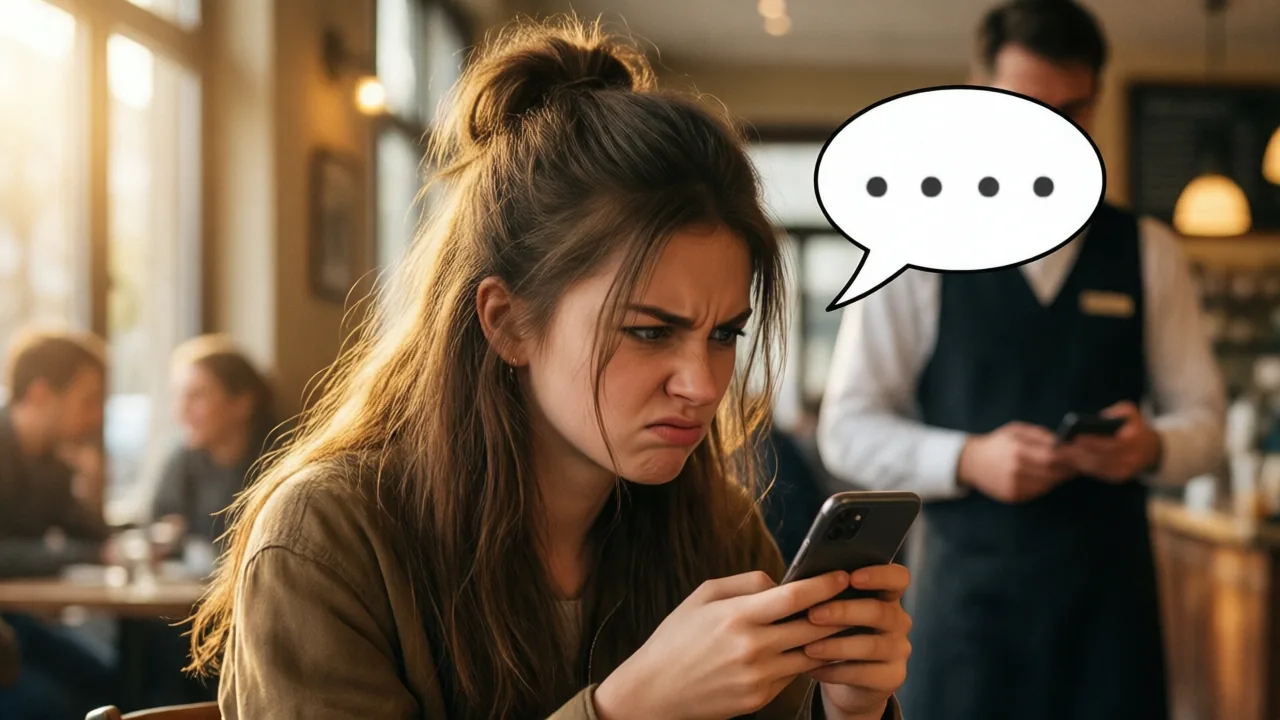
I meet you every month. You come to the free trial a little embarrassed and you say the same sentence: “Giulia, I have a 200 day streak, I finished the whole tree, and yesterday in Munich I could not order bread.” Then you laugh, and it is not really a laugh.
You did nothing wrong. In 15+ years of teaching I have watched hundreds of diligent, intelligent adults hit exactly this wall. The app told you that you were progressing. The owl cheered. The gems piled up. And the first real German who spoke at normal speed wiped it all away.
This post is my honest answer as a teacher who uses apps herself and still books human lessons when she learns a language: what apps are brilliant at, what they structurally cannot do, how ChatGPT fits in, and the exact 8 week plan I give my own students to turn app German into spoken German.
What a finished Duolingo tree actually gives you
Let me give credit first, because I recommend apps to nearly every beginner. A finished German tree typically gives you:
- Around 1,500 to 2,000 passive words (food, travel, present tense, some past)
- A daily habit, which is genuinely the hardest part of learning
- Decent reading of simple sentences and slow audio
- Confidence with isolated grammar points (articles, plurals, basic cases)
That is real. It is roughly a strong A1 vocabulary. The problem is what it does not include: not one minute of unscripted speaking where somebody answers back at normal speed, interrupts you, or looks confused when your word order collapses.
Reading a sentence and choosing the missing word is recognition. Hearing “Was darf es denn sein?” from a baker with a queue behind you and answering in three seconds is retrieval. They live in different parts of your brain, and only one of them grows by tapping.
If you want the full mechanics of that gap, I wrote it up here: Why You Understand German but Can’t Speak It. Short version: your comprehension is an asset. It is simply waiting to be converted into speech.
Three students, same streak, same wall
Marco, 34, developer from Milan. 312 day streak, finished the tree, Anki deck of 3,000 cards. First trial lesson: perfect written sentences in the chat, silence when I asked “Erzähl mal, was hast du am Wochenende gemacht?” He could write the past tense. He had never said it.
Sarah, 41, nurse from London. Babbel plus Duolingo for a year before her move to Hamburg. Knew every body part. Froze at “Haben Sie Schmerzen beim Atmen?” because no app had ever made her answer a question she did not choose herself.
Daniel, 28, student from New York. Did all of Duolingo plus daily ChatGPT chats. Wrote charming paragraphs. In the trial he spoke in English word order with German words, because the chatbot had politely “understood” him for months without ever stopping him the way a baker would.
All three spoke freely within two months once the training changed. Not because they studied more, but because they finally trained the right skill.
The honest table: apps vs AI vs humans
| Method | What it actually builds | Speaking payoff | Cost signal | Best for |
|---|---|---|---|---|
| Duolingo | Daily habit, A1 vocab, reading | Almost none on its own | Free to cheap | Starting from zero, staying in touch |
| Babbel / Busuu | Structured A1 to A2 grammar, dialogues | Low (scripted only) | Subscription | Learners who want order |
| ChatGPT / AI tutors | Writing correction, role play drafts, explanations on demand | Medium for writing, low for pronunciation and pressure | Free to subscription | Extra reps between lessons |
| Small group, max 6 | Live speaking, correction, listening at speed | High | About 12 euro per lesson here | Regular speaking with low pressure |
| 1:1 with a native teacher | Personal correction, exam plan, fossilized error repair | Highest | About 44 euro per 45 min here | Fast repair, exams, work needs |
Notice the pattern. Everything left of the table trains you alone. Everything right trains you in front of a person. Speaking is a social skill, so it grows fastest under social conditions: mild pressure, real ears, instant correction.
Why ChatGPT is a great assistant and a poor teacher
I use ChatGPT in my own prep work, so this is not a rant. It is superb at: rephrasing your email three ways, drilling a case table into example sentences, role playing a job interview at midnight.
It fails at three teacher jobs:
1. It cannot hear you. Pronunciation, rhythm, and the famous German sentence melody never get checked. You can mispronounce “ich” for a year and it will keep praising your sentences.
2. It agrees too easily. Chatbots are tuned to be helpful, so they guess what you meant instead of stopping you. A human teacher stops you at the exact error that makes Germans switch to English. That sting is the lesson.
3. It does not hold you accountable. Nobody ever kept a streak because a chatbot raised an eyebrow. My group students show up because five other people expect them. That social contract beats motivation every time.
Use AI as your sparring partner between lessons. Do not confuse sparring with the match.
The little things apps never teach you (example: doch, mal, denn)
Here is a concrete taste of what lives beyond the tree. German runs on tiny flavor particles that carry tone, and apps barely touch them because they cannot be tapped into a box:
- doch: “Komm doch mit!” (Oh come on, join us, warm invitation, not a command)
- mal: “Schau mal!” (Just look, softens everything)
- denn: “Was ist denn los?” (So what is going on then, curious not cold)
My app graduates always say the same thing in week three of live lessons: “Nobody told me Germans talk like this.” They do. You simply never heard it at speed with somebody waiting for your answer.
The 8 week fix: from app German to spoken German
Rules: keep the app at 10 to 15 minutes a day for words. Move everything else to voice. You need about 3 hours a week total.
Weeks 1 to 2: unblock the mouth. Shadow 10 minutes daily: play slow German audio (Deutsche Welle Langsam gesprochene Nachrichten), repeat aloud with the recording, copying rhythm not just words. Learn 12 sentence chunks by heart (Ich glaube, dass… / Kannst du mir sagen, ob… / Gestern bin ich… / Ich wollte nur kurz…). Speak twice: one trial or group lesson plus one voice message to yourself describing your day.
Weeks 3 to 4: build continuity. Same shadowing, normal speed now. Retell a 60 second story three times until it flows. Start the “no English” rule for the first 15 minutes of every lesson. Expect mistakes to spike. That spike means retrieval is finally training.
Weeks 5 to 6: add pressure. Role play real scenes: bakery, Bürgeramt appointment, doctor call. Record yourself once a week and count filler pauses. Bring your top 3 fossilized errors to the teacher and drill only those.
Weeks 7 to 8: prove it. Hold a 10 minute conversation with no switching to English. Order, complain politely, and small talk about the weekend. Most of my app graduates pass this checkpoint here. Then decide: continue the group for flow, or book 1:1 sprints for an exam.
Track one metric only: minutes spoken per week. Words tapped do not count.
Should you delete the app?
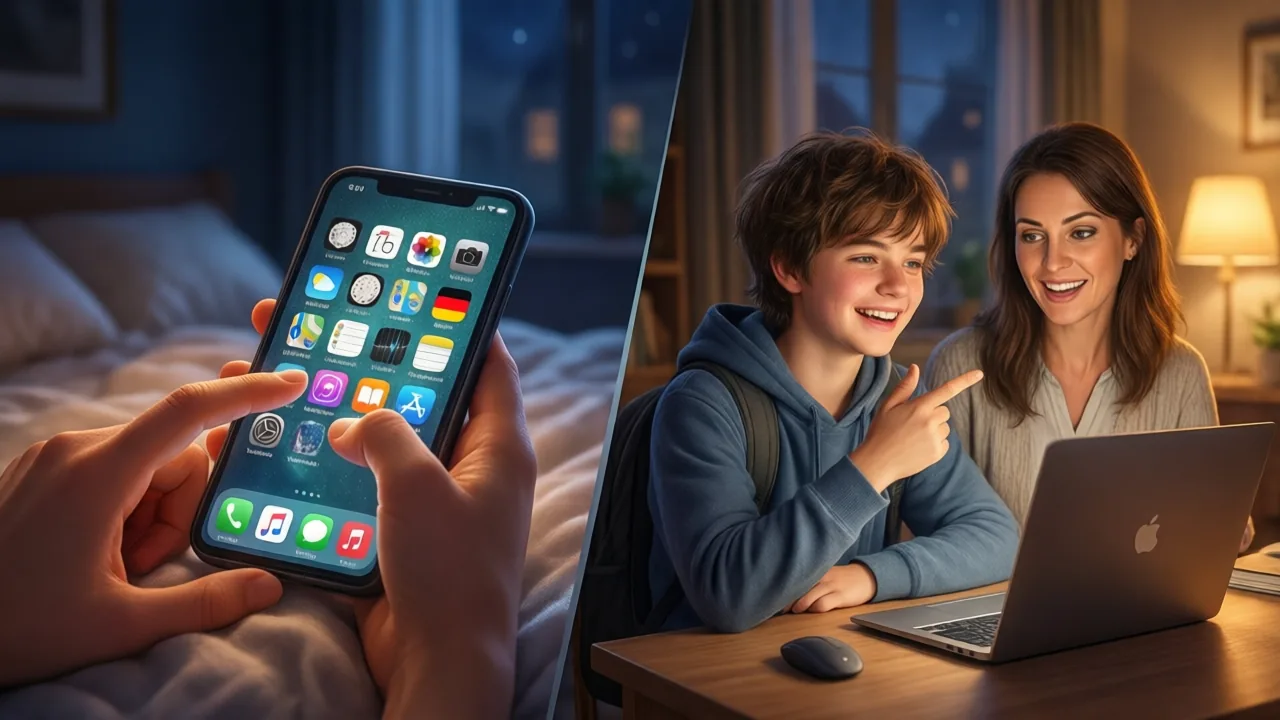
No, unless you hate it. Keep the streak as your daily vitamin and stop expecting it to be the meal. The healthiest setup I see:
- App: 10 minutes, vocab and fun, morning
- Shadowing: 10 minutes, mouth training, lunch break
- Live speaking: 2 times 45 minutes a week, the actual sport
- Spaced repetition: 5 minutes, rescue the words you failed to say that day
Apps are good servants and bad masters. Vocabulary from the app, voice from real practice.
The fastest shortcut: borrow somebody else’s ears
Everything above works solo except the last mile. At some point you need a person who waits for your sentence, looks confused at the right moment, and fixes the two errors that cost you most.
That is why I keep my group course at a maximum of six students. Six means everyone speaks every session, the pressure stays friendly, and the price stays near 12 euro a lesson. If your schedule or level does not fit a group, my 1:1 lessons do the same repair work privately, faster.
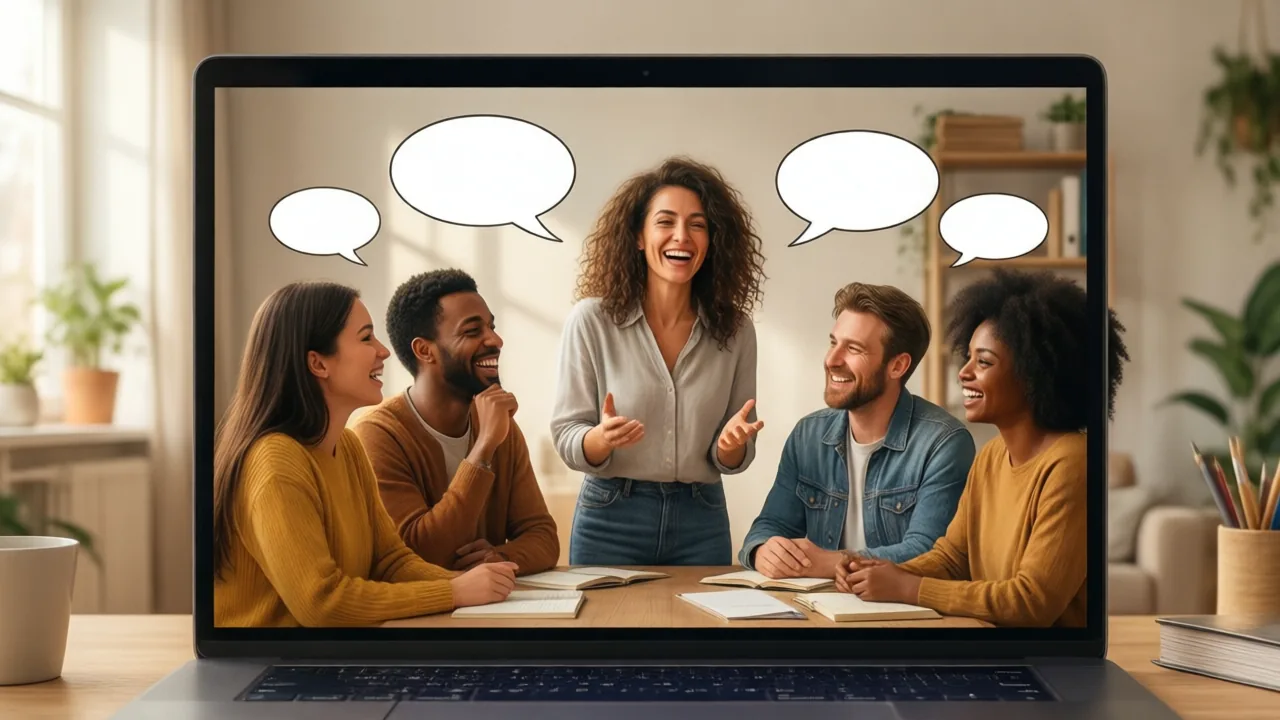
The first group lesson doubles as your free trial. Come with your streak intact and leave with your first real conversation. The owl will forgive you.
Frequently Asked Questions
Why am I still A1 after finishing Duolingo German? Because tapping builds recognition and speaking needs retrieval. Your words are real, your live practice is near zero. Train the second skill and the level follows.
Is Duolingo enough for German? For habit and A1 words, yes. For conversation, exams, or work, no. Keep it as a supplement.
Can ChatGPT replace my teacher? For writing help and extra reps, it is great. For pronunciation, accountability, and honest correction, no.
How fast can I fix it? Eight weeks with twice weekly speaking plus daily shadowing is the normal path I see. Weeks 1 to 2 feel awkward, weeks 5 to 8 feel like continuity.
Should I delete the app? Only if it bores you. Cap it at 10 to 15 minutes and spend the rest on voice.
What is the one thing to start today? Shadow one slow news clip aloud for 10 minutes, then say your day out loud in German for 2 minutes. Tomorrow, book the trial.
You already did the hard part: months of daily discipline. Now convert it. In my small group course (max 6) you speak from minute one, get corrected live, and keep your streak as backup, and the first lesson doubles as your free trial.
Turn My Streak Into Speech