Online German Courses
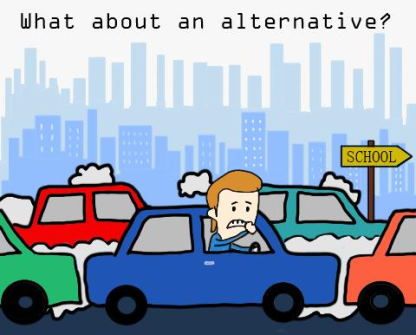
I remember when people used to ask me: “Can you really learn a language online?” Ten years ago it was a fair question. Today? The technology is so good that online lessons often work better than sitting in a classroom.
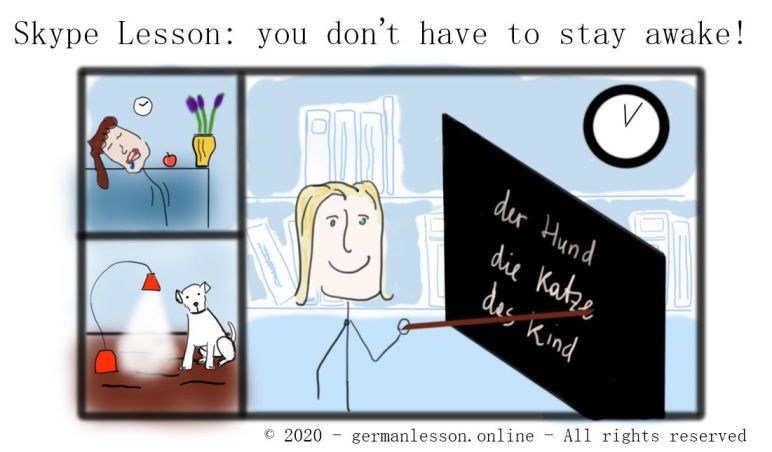
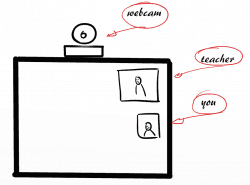
Here’s how it works: you and I connect over Microsoft Teams (or another tool if you prefer). We see each other, we talk, I teach — just like a real class. The difference is you’re at home, in your own space, and the lesson is built around you.
A lot depends on the teacher keeping you engaged. That’s where experience matters. I’ve been doing this long enough to spot when a student is drifting or getting tired. I adjust. I change pace. I make sure you stay with me.
And here’s something you can’t do in a traditional classroom: I can record the lesson. You can watch it again later, review what we covered, catch something you missed. That alone makes online learning powerful.
A bit about me 👩🏫
I studied linguistics at LMU Munich and I’ve been teaching languages for over 15 years now.
I’ve worked with students from all over the world 🌏 — name a country, I’ve probably had a student from there. I’ve taught individuals and groups, adults and children.
I launched my online courses because I realized that the physical classroom isn’t the only place where real learning happens. In some ways, online is even better.
My German courses
The beauty of online courses? They adapt to you. You’re always at the Mittelpunkt (center) of the learning process.
Here’s a rough breakdown of what I offer:
- Generic course. Once or twice a week, learning at a steady pace with solid foundations. The most popular option. Right for you if you don’t have a tight deadline.
- Intensive course. Need German fast? We meet two hours a day, immerse ourselves in the language, and get you there quickly.
- Semi-intensive. Somewhere between generic and intensive. Say, two lessons twice a week.
- For children 🧒. Lots of fun, lots of games — all in German. I use methods that work for young learners. And we keep it to 45 minutes max, because kids lose focus fast.
- For professionals. Focus on the working world. Vocabulary for meetings, emails, presentations. And since many of my students work — or want to work — in Germany, we talk a lot about the German work culture.
- For holidays. Planning a ski trip to the Alps 🎿? I can’t promise you’ll understand the Austrian dialect 😎, but standard German? No problem.
- Exam preparation. Goethe, testDAF, telc — they’re all different, and the prep is different too. I help you understand which exam you need and get you ready.
- Conversation course 💬. The mistake most students make? They memorize grammar but never learn to speak. In this course, we take those rules and actually use them in real conversation.
Book a Lesson
Flexible price structure. More lessons, more savings!
Levels 🌡️
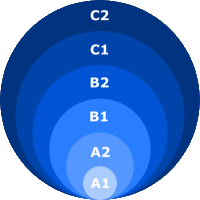
I teach all levels from A1 (beginner) to C2 (native-like fluency). These follow the CEFR — the European standard.
| Level | What you can do |
|---|---|
| A1 | Understand and use everyday expressions. Introduce yourself. Have a basic conversation if the other person speaks slowly and clearly. |
| A2 | Understand frequently used phrases. Handle simple routine tasks. Describe your background and immediate needs in simple terms. |
| B1 | Understand the main points of clear input on familiar topics (work, school, leisure). Handle situations that come up while traveling. Produce simple connected text on topics of personal interest. |
| B2 | Understand complex texts on concrete and abstract topics. Interact with native speakers fluently and spontaneously. Produce clear, detailed text on a wide range of subjects. |
| C1 | Understand long, demanding texts and recognize implicit meaning. Express yourself fluently without searching for words. Use the language flexibly for social, academic, and professional purposes. |
| C2 | Understand virtually everything you hear or read. Summarize information from different sources. Express yourself spontaneously with precision and nuance. |
Not sure what your level is?
The CEFR has a useful self-assessment document. Read through it and for each skill — listening, reading, speaking, writing — see which description fits you best. Or just contact me and I’ll help you figure it out.