Online German Lessons
I’ve been teaching German online for over 15 years now. And honestly? It works better than most people expect.
A lot of folks think online lessons are somehow second-best compared to sitting in a classroom. I used to hear it all the time when I started. “But Giulia, can you really learn a language over a screen?”
The answer is yes — and often faster than in person.
Here’s why. With online lessons, you’re not stuck with whoever happens to teach in your area. You get a native speaker who actually lives in Germany and knows the language inside out. No commuting, no rushing through traffic after work. Just you, your screen, and a lesson that’s built around what you need. In fact, when people search for German classes near me, they are often looking for exactly this kind of convenience — learning from home with a real teacher.
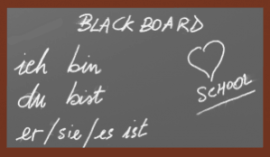
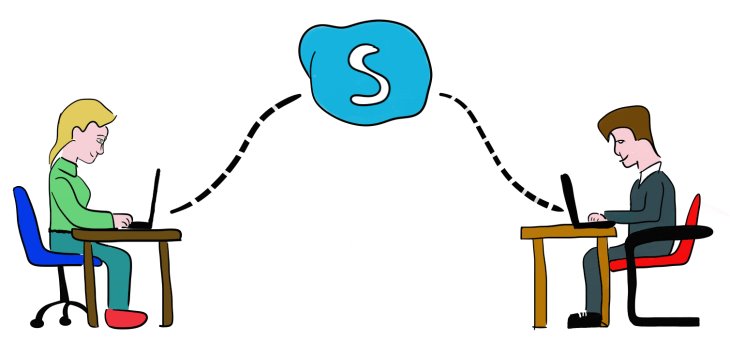
Plus, the tech is solid now. Video and audio are crystal clear. We share screens, use a virtual blackboard, and I can even record the lesson so you can review it later. It’s not a compromise. It’s just a different way of teaching — and for language learning, it’s a really good one.
If you are looking for a complete strategy to structure your learning at home, I have written a detailed guide on the best way to learn German from home. It covers the same principles I use with my students.
This page covers my 1:1 online German lessons. If you’re looking for a group course instead, check out my virtual classroom German.
1:1 German lessons with a native tutor
When you book with me, you get one-on-one attention. No group, no distractions. Every lesson is built around your goals — whether that’s passing an exam, improving your business German, or starting from absolute zero.
I also specialize in helping Italian speakers learn German. I know where the tricky parts are for Italian learners because I’ve worked with dozens of them. The similarities help, the differences need extra attention — and I know exactly where to focus.
A bit about me 👩🏫
I’m a native German speaker with a degree in linguistics from LMU Munich. I’ve been teaching German as a foreign language for over 15 years now — both in person and online, in group courses and one-on-one. You can read more about me and my background if you are curious.
What I’ve learned in all those years is this: speaking is what matters most. Grammar is important, sure. But I’ve seen too many students who know all the rules by heart and still freeze up when they have to talk. That’s not fluency.
My lessons focus on getting you to actually use the language. From day one.
Why online lessons work
Before I get into the different courses I offer, let me tell you why learning German online actually makes sense.
No commuting 🚌
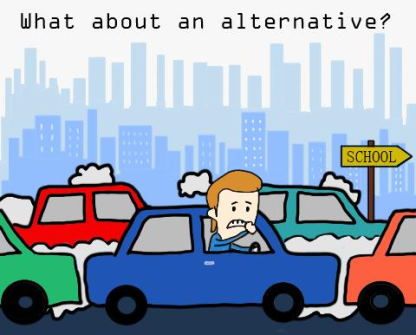
Unless you live in a castle, the travel time is basically zero. You walk to your computer and you’re there.
Think about it. You finish work, you’re tired, and instead of rushing to a language school across town, you just open your laptop. That’s a huge difference. It saves time, energy, and makes it much easier to stick with it.
A real native speaker, wherever you are
This is the big one. Online German lessons with a native speaker mean you’re learning from someone who actually grew up with the language. No accent, no textbook German that nobody uses in real life.
And here’s the thing: you might not have a native German teacher living anywhere near you. But online? Location doesn’t matter. You can be in a small town in Italy, a village in Brazil, or anywhere else — and you still get a teacher from Munich who knows the language inside out.
Language and culture go together
Learning German isn’t just about grammar and vocabulary. You also want to understand the culture, right? The way people actually talk, the humor, the customs.
Since I live in Germany, that’s part of every lesson. I bring in real-life topics, things happening in Germany right now, and cultural context that you just don’t get from a textbook.
Safety ⛑️
This one’s simple. You’re learning from the comfort of your own home. No travel, no entering a stranger’s house, no worrying about your safety. It’s just you and the lesson.
Courses I offer
Not everyone needs the same thing. Here’s what I offer:
- General German Course. This is the most popular one. You take 1 or 2 lessons per week (or even 1 every two weeks — whatever fits your schedule). We build a solid foundation at your pace.
- Intensive Course. For those who want faster results. We meet 2 or 3 times a day, Monday to Thursday. It’s immersive, it’s intense, and you’ll progress quickly.
- Course for Juniors. Teaching kids is different. Younger learners — especially pre-school children — need a different approach. I’m trained to work with them, making lessons fun and age-appropriate.
- Crash Course for Vacation 🏖️. Going to Germany, Austria, or Switzerland? This course gives you practical phrases, useful vocabulary, and cultural tips so you can actually get by. No grammar overload.
- Exam Preparation. Goethe, testDAF, telc — I’ve prepared students for all of them. I know what these exams look like and what it takes to pass. We train each competency area, do mock tests, and fix weak spots.
- Conversation Course. You’ve studied grammar for years but still can’t speak? That’s exactly what this course is for. We just talk. I guide the conversation, correct you when needed, and help you build real fluency.
- Business German. For professionals who need German at work. Business vocabulary, formal emails, presentations, job interviews — tailored to your industry. If you’re preparing for a job in Germany or need to communicate with German clients, this is the one.
CEFR Levels — what do they actually mean?
I teach all levels from A1 to C2. These follow the CEFR — the European standard for language ability.
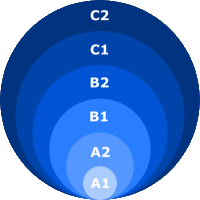
Here's what each level looks like in practice:
| Level | What you can do |
|---|---|
| A1 | Understand and use everyday expressions. Introduce yourself and others. Have a basic conversation if the other person speaks slowly and clearly. |
| A2 | Understand frequently used expressions. Handle routine tasks in a simple way. Get by in the country, even if with some difficulty. |
| B1 | Understand the main points of clear input on familiar topics. Produce simple connected text. Talk about experiences, events, and plans. |
| B2 | Understand complex texts, including technical discussions in your field. Produce clear, detailed text on various subjects. |
| C1 | Understand long, complex texts and recognize implicit meaning. Express yourself fluently without much searching for words. |
| C2 | Comparable to a native speaker. Understand everything you hear or read. Use finer shades of meaning. |
How I teach each level
A1 is where we build the foundation. Yes, there’s grammar — but don’t worry if that’s not your thing. I’ve had plenty of students who hated grammar and still did fine. We find a way that works for you 😉.
From A2 to B1, we shift from abstract grammar to more real-world vocabulary and phrases. Pronunciation starts getting more attention here — it’s often overlooked but it matters a lot.
B2 is a consolidation level. We solidify everything you’ve learned so far. Passing B2 is a real milestone — it’s worth celebrating 🎉.
At C1, we focus on expanding your vocabulary and making your speech flow naturally. You’ll start expressing yourself with confidence.
C2 is the top. You master the language in all its facets. If you want, we can even explore German dialects at this point. Between us, C1 and C2 lessons are the most fun — they’re mostly conversation, very relaxed, and you get to really enjoy the language.
If you are working through the lower levels, I have written detailed guides on some of the topics my students struggle with most:
- Dativ vs Akkusativ explained — when to use which case
- German adjective endings — a step-by-step approach that actually works
- Using trotzdem and obwohl correctly — two small words that cause big confusion
And if you need a broader overview of how to approach learning German, the article on learning German covers the essentials.
How long is a lesson? ⏰
You can choose what works best for you. Here are the options:
- 15 minutes. Perfect if you have a specific question — maybe you need a text corrected or want quick feedback. Just send me the material in advance so we can use the time well.
- 45 minutes. The standard choice. Ideal after a long work day when you don’t want to overdo it. Also great for kids and teenagers who can’t stay focused for too long.
- 90 minutes. You’re motivated, you have the time, and du hast Spaß (you’re having fun)! This gives us room to really work through topics in depth.
Pricing 💰
I try to keep it fair. You can find the full breakdown on the Pricing page.
See all lesson fees and package options on the Pricing page.
What a lesson looks like 👩💻
Never done an online lesson before? Here’s how it works.
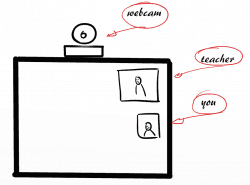
We use a few tools together to make the lesson effective. Some are the same as in a traditional classroom, some are unique to online learning.